Guide
How to Clean a Coil Electric Stove Top, Step by Step
Six steps to clean coil burners, drip pans and the lift-up top of an electric stove, what never to do, and which warning signs mean a technician.
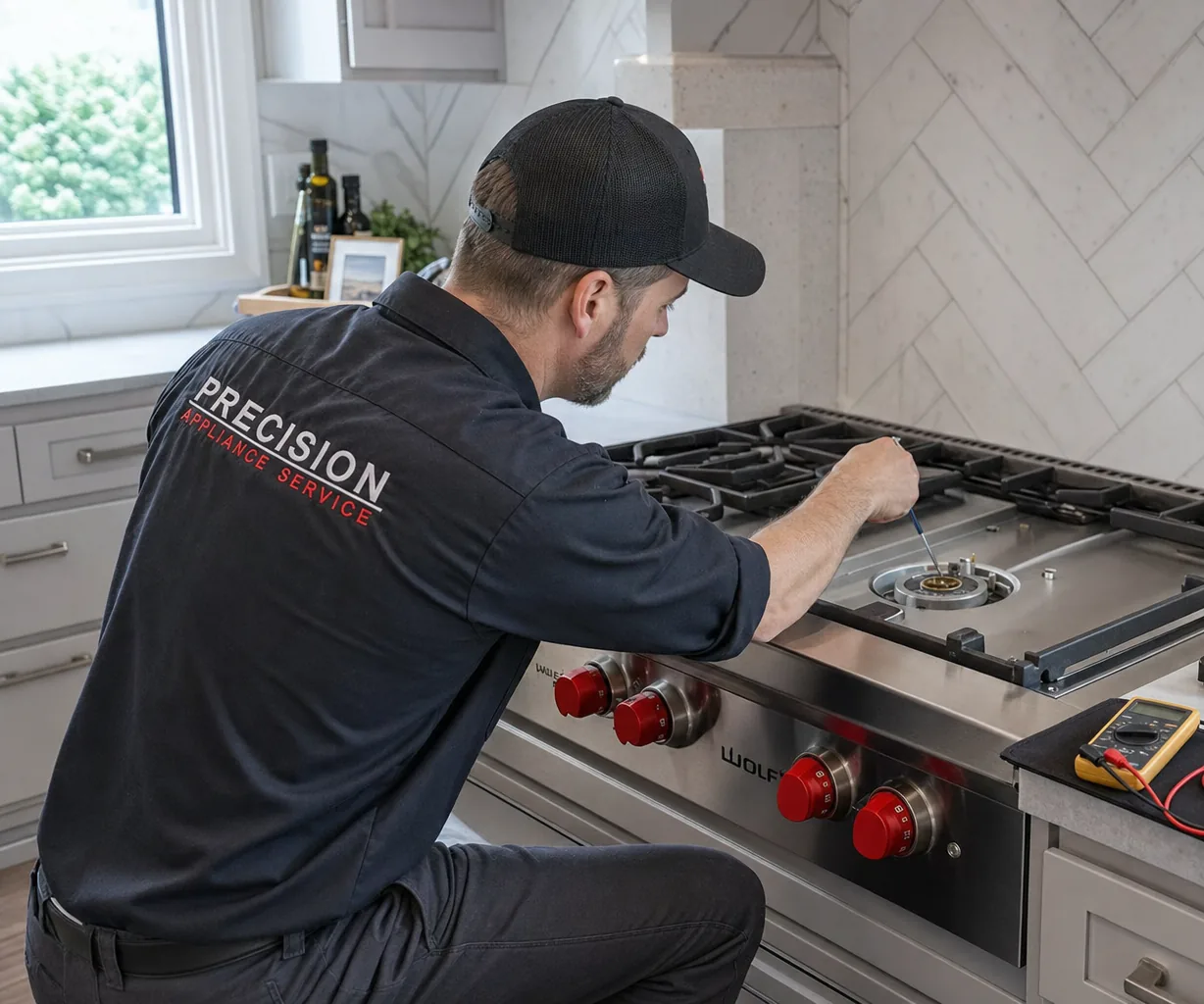
To clean an electric stove top with coils, turn every knob to OFF, let the elements cool for at least 30 minutes, then work through six steps: unplug the coils, wipe them, wash the drip pans, clean under the lift-up top, wash the knobs and reassemble. A routine pass takes about 20 minutes, plus a 15–20 minute soak if the drip pans are greasy.
Coil burners belong to basic freestanding electric ranges. Wolf does not build them: its electric cooktops have a smooth glass surface. If you own a pro-style range plus a coil stove in a rental unit or second kitchen, this guide covers the coil stove.
What do you need before you begin?
Gather dish soap, baking soda, a non-scratch sponge, a soft-bristle brush, dry towels and, for badly burnt drip pans, household ammonia and zip-top bags. Skip steel wool; it scratches chrome and porcelain enamel. If the knob markings are worn and you can’t tell OFF from LOW, switch off the range’s breaker first.
How do you remove and clean the coils?
- Lift the coil about an inch at the end opposite the plug and pull it straight out of its receptacle without bending the terminal prongs.
- Lift out the drip pan underneath.
- Wipe the coil with a damp, soapy cloth; for crusted spots, use a baking soda paste and the soft brush.
- Keep the terminal end dry and never submerge the coil. Water trapped where the terminals enter the element can cause a short.
- Let the coil dry completely before it goes back in.
Much of what sticks to a coil burns off on its own: run a clean, dry coil on high for a couple of minutes with the hood fan on.
How do you get drip pans clean again?
Drip pans sit under each coil and catch boilovers. Viking’s advice for its burner grates is a good model: soak 15–20 minutes in hot soapy water, adding a cup of sudsy ammonia for tough stains, then dry thoroughly.
For burnt-on rings, coat the pan with baking soda paste, wait 15 minutes and scrub. For the worst pans, seal each in a zip-top bag with about 1/4 cup of household ammonia overnight in a well-ventilated spot, then rinse well. Never mix ammonia with bleach or any chlorine cleaner.
A rainbow tint on chrome is permanent heat discoloration. Replace a rusted or warped pan with the size made for your range, since a warped pan lets the coil sit unevenly, and keep chrome pans out of the self-clean cycle.
Don’t line the pans with aluminum foil; it reflects heat into the element and receptacle and can overheat the wiring. Foil causes trouble in ovens too: CPSC warns against covering the bottom of a natural gas or propane oven with foil, because it blocks combustion air and can produce carbon monoxide.
How do you clean under the top, the knobs and the trim?
Many freestanding coil ranges have a cooktop that lifts and props open. With the coils and pans out, raise it and wipe the spill area underneath; grease left there can smoke when the oven heats.
Pull the knobs straight off and wash them in warm soapy water. Spray cleaner onto a cloth, never directly onto the control panel, so liquid can’t run into the switches. Wolf gives the same instruction for its dual fuel control panel: touch and hold Lock for 3 seconds, then spray degreaser on a cloth rather than on the panel.
Use a non-abrasive cleaner on porcelain enamel and wipe acidic spills promptly. On stainless trim, wipe with the grain. Thermador recommends its Stainless Steel Conditioner (part # 00576697) and warns that cleansers with chlorine or chlorine compounds corrode stainless steel.
How often should each part be cleaned?
- After each use, once cool: wipe spills before they bake on.
- Weekly in a busy kitchen: wash the drip pans.
- Monthly: pull the coils, deep-clean, lift the top and wash the knobs.
- Every few months: inspect coils for blisters and receptacles for scorch marks.
When is a coil problem more than dirt?
Cleaning won’t fix a failing element, receptacle or switch, and some of these are fire risks.
| Symptom | Likely cause | What the owner can check | When to call a technician |
|---|---|---|---|
| Smoke or burning smell as a coil heats | Food residue on the coil or drip pan | Clean the coil and pan, then run it on high briefly with the hood on | If it smells like hot plastic or keeps returning |
| Coil won’t heat | Coil not fully seated, failed element or failed switch | Reseat the plug-in; swap in a same-size coil from another position | If a known-good coil also fails in that spot |
| Coil heats only on high or won’t shut off | Failed infinite switch | Check that the knob isn’t cracked or slipping on its shaft | Right away; keep the breaker off until it’s fixed |
| Sparks, arcing or blackened terminals | Burned receptacle or loose wiring | Turn the breaker off and look for scorch marks | Always; don’t use that position |
| Blister, bulge or bright spot on the coil | Element failing | Replace the coil with the correct part | If the receptacle is discolored too |
| Wobbly coil or uneven heating | Warped drip pan or bent support | Fit a new drip pan of the right size | If the receptacle mount is loose |
As typical ranges, cooktop repair runs $200–$750, range / oven repair $250–$900 and a diagnostic / service call $95–$149; the firm quote is given on site after diagnosis. See repair pricing for the full list, or read about range repair and cooktop repair.
Irvington Wolf Appliance Repair is an independent service, not manufacturer-authorized. From Irvington Village, East Irvington, Dobbs Ferry or Tarrytown, call (914) 275-0968.
Frequently asked questions
Can I put coil burners in water to clean them?
No. Wipe them with a soapy cloth or a baking soda paste, keep the terminal end dry, and let each coil dry completely before plugging it back in.
Is it safe to clean drip pans with ammonia?
Yes, if you keep the ammonia sealed in a bag, work in a well-ventilated spot and rinse the pans well afterward. Never combine it with bleach or any chlorine product.
Should I line drip pans with aluminum foil?
No. Foil reflects heat into the element and its receptacle and can overheat the wiring, so replace stained pans instead of covering them.
Why does a coil smoke right after cleaning?
A short puff is usually leftover cleaner or residue burning off. If the smoke continues or smells electrical, turn the coil off and have it checked.
Can a damaged coil element be repaired?
No, a damaged coil is replaced rather than repaired. If a new coil still won’t heat, a technician should test the receptacle and the switch.